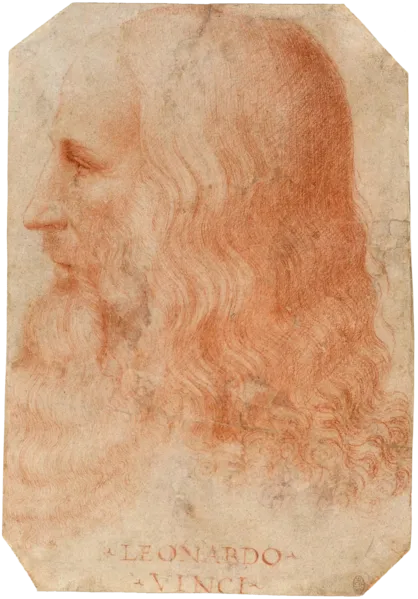
Leonardo da Vinci was arguably the best painter of his day. And yet, he was also a visionary engineer who designed and built ideas well ahead of their time, drawing up gadgets such as helicopters, tanks, diving suits, and vehicles with motorized engines. On top of that, he was a great scientist, dedicating many pages of his notes to human anatomy, much of which came from personal experience conducting dissections of human cadavers, in which he carefully recorded the structure of bones, the layering of muscles, and the intricate web of veins and nerves. These studies led to some of the most accurate anatomical drawings, influencing medical understanding for centuries. As one biographer wrote about Leonardo, he was an “all-sided genius” who “loved beauty.”
How Leonardo achieved such remarkable talent in so many diverse disciplines is something this snapshot biography will explore. But at the foundation must be his curiosity. It seemed to know no bounds. Leonardo lived wanting to know everything about everything, asking basic yet profound questions such as, “Why is the sky blue?” or “How do birds sustain themselves in the air?” He’d walk around finding wonder in the most ordinary things, such as how light touched the world while observing the most minute details in how it did so. In many ways, he was the ultimate Renaissance man.
Ironically, though, for all his remarkable achievements and work, Leonardo was known for working slowly, often unfocused, switching between and not completing many of the projects he had started. Sometimes, this even included paid commissions. And though he is often remembered as a painter, he only finished about twenty works throughout his life. His most famous painting, the Mona Lisa, took him about sixteen years to complete.
Perhaps this blend of brilliance and imperfection contributes to making Leonardo so enduring. As his unfinished works serve as reminders that even the greatest minds are not immune to distraction and that curiosity is both a gift and, at times, a challenge.
The following is Leonardo’s story.
“Wisdom is the daughter of experience.” – Leonardo da Vinci
Leonardo was born on April 15, 1452, in a stone farmhouse nestled among the rolling hills of Vinci, a small village in the rural parts of Tuscany. He was born out of wedlock to a local notary, Ser Piero, and a woman of a lower class named Caterina. Though his parents did not marry, young Leonardo was welcomed into his father’s household, receiving some reading, writing, and arithmetic education. However, it was not in a classroom but in nature that Leonardo’s education truly began, as he roamed the countryside, exploring the natural world. Flowing water through streams, how animals moved, and the changing light over the landscape all became lessons to study.
While being born out of wedlock did pose some challenges, it also offered Leonardo a certain freedom. As was the custom of the day, he was not expected to follow in his father’s footsteps and become a notary, a career that many legitimate sons would have been obliged to pursue. At the same time, many other professional paths were also closed to him. But this lack of expectation and opportunity proved to be a hidden blessing. Instead of being tethered to a particular trade, Leonardo could explore his interests without the weight of familial obligation.
This exploration led Leonardo into art, as from a young age, he had shown a talent for drawing, filling his notebooks with sketches of the world around him. His father recognized this gift and helped secure him an apprenticeship with Andrea del Verrocchio. At the age of fourteen, Leonardo moved to Florence to apprentice with the renowned artist. And it was here that his talents would begin to flourish.
“At a time when every individual sought to gain the widest latitude for his activity, which could not take place without the development of energetic aggression towards others, he surprised every one through his quiet peacefulness, his shunning of all competition and controversies. He was mild and kind to all, he was said to have rejected a meat diet because he did not consider it just to rob animals of their lives, and one of his special pleasures was to buy caged birds in the market and set them free.” – Sigmund Freud in his biography of Leonardo da Vinci
Many believe that genius is innate. Simply luck of the draw. Yet, even if this is true, an important question remains: how is genius nurtured into greatness?
Subscribe to get access
Read more of this content when you subscribe today.
Discover more from Historical Snapshots
Subscribe to get the latest posts sent to your email.
