On August 12, 1865, eleven-year-old James Greenlees was brought into the male accident ward of the Glasgow Royal Infirmary with his left shinbone protruding through the skin. A cart had run him down in the street.
Compound fractures, where the bone breaks the skin and lets the air in, killed roughly half the patients who suffered them at the time. The deaths, however, rarely came from the injury itself, but from the surgery that followed, with amputation being the standard treatment. At the Edinburgh Infirmary, forty-three of every hundred amputees died. At the Paris hospitals, it was closer to sixty. Sir James Simpson, the Scottish discoverer of chloroform anesthesia, summed it up: “the man laid on the operating table in one of our surgical hospitals is exposed to more chances of death than the English soldier on the field of Waterloo.” The numbers had grown bad enough that some reformers were calling for an end to hospital surgery altogether.
Those were generally the odds James would have faced as he was brought into the operating room. But the treatment he was about to experience would be different, the first of its kind.
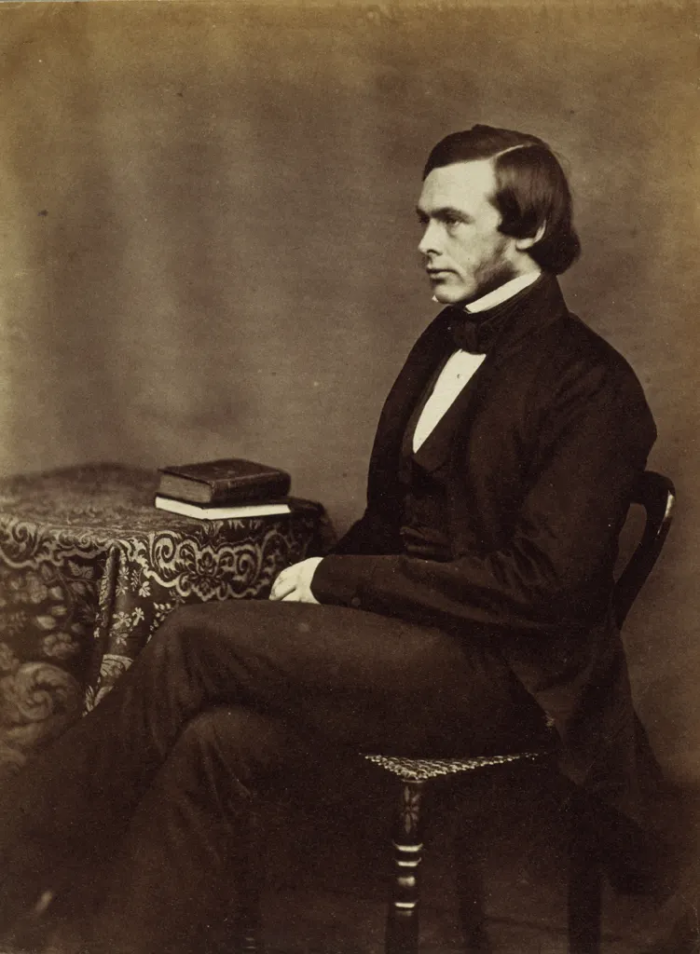
The surgeon who came to operate on James was a tall, fresh-faced Englishman named Joseph Lister. Quaker-raised and soft-spoken, afflicted since boyhood with a stammer that caught him hardest at the end of long lectures, he was not a commanding figure. His cousin once described Joseph as “kind and considerate but rather dwelling apart,” meaning a man who was easy to like but difficult to know. At thirty-eight, Joseph was Professor of Surgery at the University of Glasgow and a Fellow of the Royal Society, respected as a researcher on inflammation, yet not well known otherwise.
It was that research that made Joseph receptive to a set of papers that arrived earlier in the year. A chemistry colleague, Thomas Anderson, had given Joseph the latest research by Louis Pasteur. Pasteur was a French chemist who spent years studying why wine spoils. His answer, by 1865, was that spoilage was not something that simply happened, but the work of living microscopic things. The same process, he argued, governed the rot of any organic matter.
Joseph read the papers and saw a potential parallel to the patients dying after surgery. He believed the wounds that festered in his wards were not healing because they were being infected by germs carried in on hands, instruments, dressings, and the ward itself. Surgeons then even wore their operating gowns stiff with dried blood and pus.
The question, then, became how to keep the germs out. The year before, Joseph had read an account of what was happening in Carlisle, an industrial town a hundred miles south of Glasgow. The stench from its sewage had become a public health concern, and the town had begun treating its waste with carbolic acid before spreading it on nearby fields. The chemical, however, did more than mask the smell. Cattle grazing on those fields, which had previously been plagued by parasitic worms picked up from the sewage, were no longer getting infected.
Joseph believed that if the chemical was killing whatever lived in the sewage, it might kill whatever lived in a wound. He sent for a supply.
Joseph worked slowly through the surgery. He always worked slowly, but even more so this time, as he was about to do something he had never done. After cleaning the wound and setting the bone, he reached for the carbolic acid. The smell of it came up sharp and tarry, medicinal, nothing like the wound-smell the dressers were used to. The first application, undiluted, burned the boy’s skin red where it came into contact. Joseph diluted the next batch in olive oil, soaked a lint pad in it, and laid the pad over the broken bone. Then he bandaged and splinted the leg.
In the days that followed, Joseph returned, lifted the dressing, applied fresh carbolic, and waited for the smell he had smelled many times before, the one that meant a patient was beginning to die. But it did not come this time. Six weeks later, James left the Glasgow Royal Infirmary and returned to the life of an ordinary boy in industrial Scotland.
Joseph continued treating more compound fractures the same way. And two years later, in 1867, he published in a series of five articles in The Lancet, the results of eleven cases — nine recoveries, one amputation, and one death from a hemorrhage unrelated to infection. The point of the papers was not carbolic acid, which would, in time, be replaced by better antiseptics and then by sterile technique altogether. The point was the principle. Infection had a cause. And if it had a cause, it could be kept out of the wound. The dying of patients could be stopped.
As a result, surgery itself began to change. Operations that had been unthinkable became survivable, then routine. For this work, the world remembers Joseph as “the father of modern surgery” and “the greatest surgical benefactor to mankind.”
Notes:
Sources:
- Clark, Paul F. “Joseph Lister, His Life and Work.” The Scientific Monthly, vol. 11, no. 6, 1920, pp. 518–39. JSTOR, http://www.jstor.org/stable/6707. Accessed 28 Apr. 2026.
- Isaac, Susan. “Frock coats to scrubs: a story of surgical attire.” Royal College of Surgeons of England, https://www.rcseng.ac.uk/library-and-publications/library/blog/frock-coats-to-scrubs/
- “Lister’s Antiseptic Practice.” Heritage At the royal college of Physicians and surgeons of Glasgow, https://heritage.rcpsg.ac.uk/exhibits/show/lister-exhibition/lister-antiseptic-practice
- Pitt D, Aubin JM. Joseph Lister: father of modern surgery. Can J Surg. 2012 Oct;55(5):E8-9. doi: 10.1503/cjs.007112. PMID: 22992425; PMCID: PMC3468637.
- “The Case of James Greenlees.” Heritage At the royal college of Physicians and surgeons of Glasgow, https://heritage.rcpsg.ac.uk/items/show/1422
- Tunny, James Good. Joseph Lister, 1st Lord Lister, 1827–1912. About 1855, albumen print. National Galleries of Scotland Commons, Flickr, uploaded 12 Dec. 2008, www.flickr.com/photos/nationalgalleries/3102028321
- Worboys M. Joseph Lister and the performance of antiseptic surgery. Notes Rec R Soc Lond. 2013 Sep 20;67(3):199-209. doi: 10.1098/rsnr.2013.0028. PMID: 24686323; PMCID: PMC3744349.
Discover more from Historical Snapshots
Subscribe to get the latest posts sent to your email.
