Intro
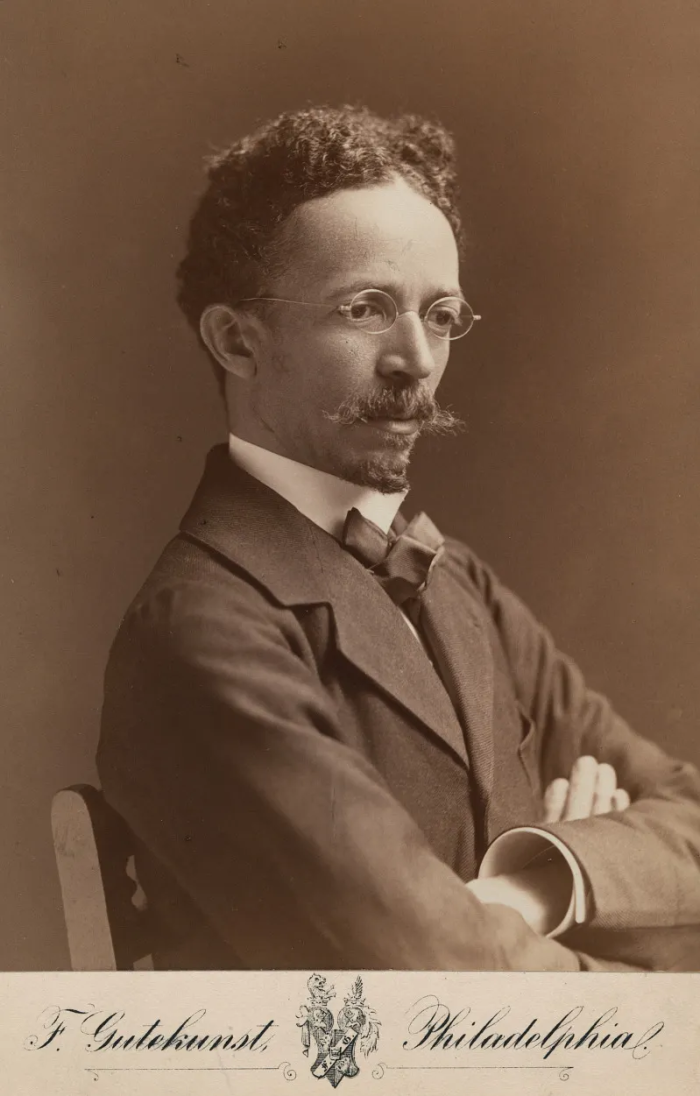
The story of Henry Ossawa Tanner begins in the U.S. just before the start of the Civil War and ends shortly before the beginning of World War II. Throughout these years, life came with the promise of Reconstruction and the perils of its demise, the segregation that followed, and then numerous global tragedies, including a world war and the Great Depression.
Yet, amid these challenges, Henry became a world-renowned painter, celebrated by some as “the greatest artist that America has produced.” This praise carried a bittersweet irony as Henry spent much of his adult life living in France, seeking refuge from America’s racial prejudice and the limitations of being a “negro painter.”
Part I
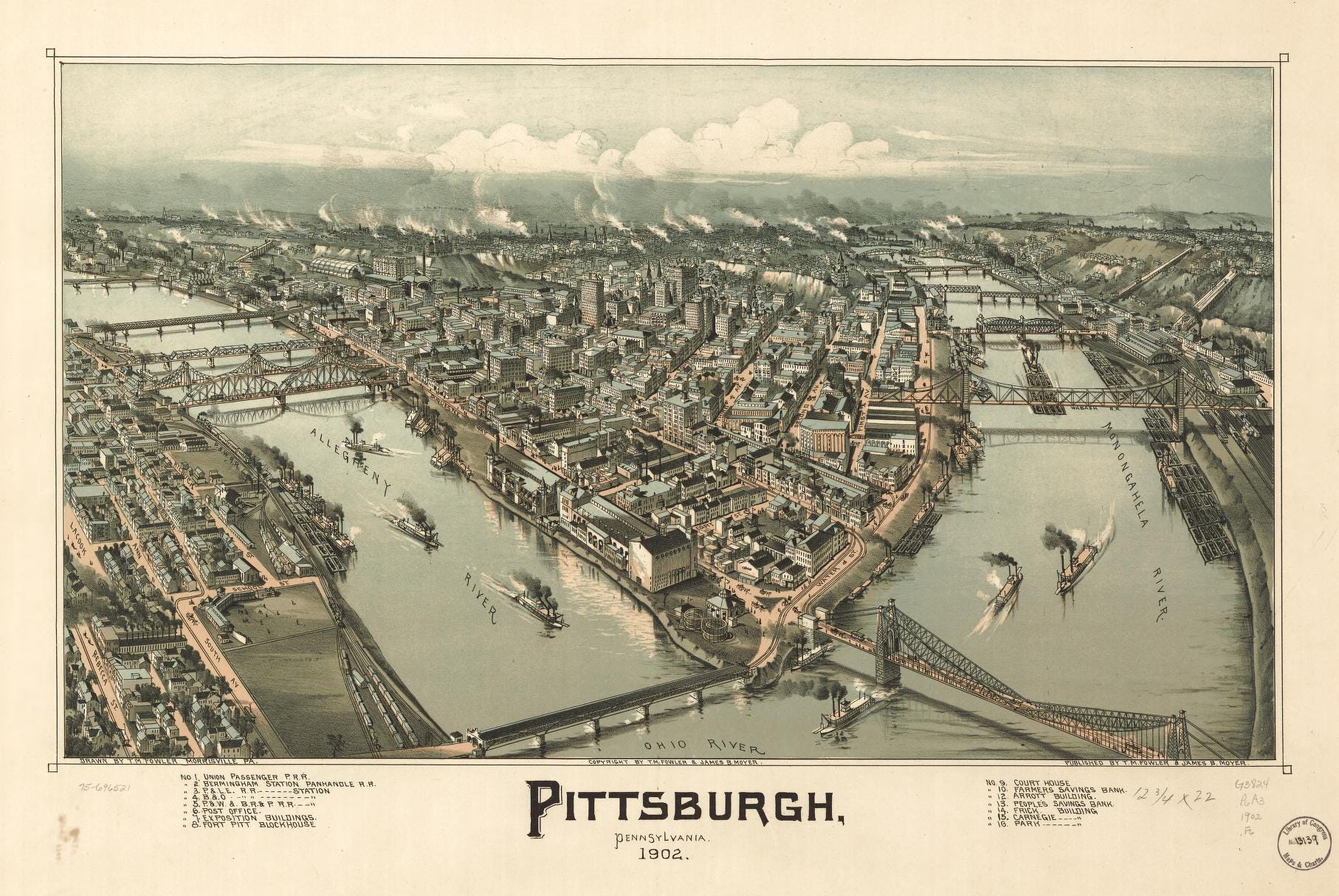
Henry was born in 1859 in Pittsburgh, Pennsylvania, at a time when America was undergoing dramatic physical, social, and political transformations. The Industrial Revolution was reshaping the country’s landscape, and Pittsburgh stood at the forefront of this change. With a strategic location at the confluence of the Allegheny, Monongahela, and Ohio Rivers and abundant coal and iron deposits, the city was becoming a hub for manufacturing and trade. Factories and mills arose as a result, earning Pittsburgh the nickname “Smoky City,” as thick plumes of soot darkened the skyline.
It was also during this time that America rapidly expanded westward under the banner of Manifest Destiny, asserting its belief in a country “from sea to shining sea.” Regions became territories, and territories were becoming states.
But, economic growth and national expansion couldn’t contain the underlying turmoil taking place in the country. America had deeply fractured in the 1850s after a decade of federal policies intended to sustain slavery only heightened tensions.
Questions about slavery’s existence were not new. Since the nation’s founding, it had been a deeply divisive issue, with Northern states gradually moving toward abolition in the decades after the Revolution. While this created a general division between free and slave states, the issue remained unresolved, with repeated conflicts over its expansion into new territories and states. But then came the Fugitive Slave Act of 1850, which required Northerners to assist in the capture of escaped slaves, bringing the horrors of slavery into their communities, transforming a relative apathy into a strong desire to end the institution and helping galvanize abolitionist movements.
Henry was born into this fraught environment as the first child of Sarah and Benjamin Tanner. The topics of slavery and racism were prominent in the family’s home, where the issues were deeply personal. Henry’s mother had been born into enslavement and lived so until escaping via the Underground Railroad. Henry’s father came from a long Pennsylvania lineage and had always been free. He was a proud American known for being vocal and uncompromising about both issues. In one of his first prominent examples, Benjamin sued a U.S. Deputy Marshall for assault and battery after the Marshall threw Benjamin out of an event in 1859. While trial records no longer exist after being burned in a fire, the action itself spoke volumes about Benjamin’s character — he would not tolerate injustice even if doing so came at great risk.
Such moral stances and determination, coupled with a strict ethos of working hard, being disciplined, and caring about details, would help Benjamin become a towering figure in the African Methodist Episcopal Church, renowned for his sermons and prolific writings that combined theological depth with calls for social justice, including a critically successful book in 1867 called An Apology for African Methodism. He was just at the beginning of his rise when Henry was born, but the habits and importance of religion would soon be passed down to his son.
The Tanner family did not stay in Pittsburgh for long. Following Benjamin’s growing career in the church, they moved first to Washington, D.C., and then to Philadelphia, where Henry spent most of his childhood.
In Philadelphia, their home became known as “the center of the black intellectual community in Philadelphia.” The home was also an extension of Benjamin’s interests and diligent focus, as observed by Henry’s niece,
“Food was never considered a matter on which one should spend precious hours of his life. I can so well remember that we children were not even allowed to discuss what we enjoyed eating. The attitude of our grandparents was that food was to be eaten only to keep the body well, so that one could work, not give pleasure. My maternal grandfather (Benjamin T. Tanner), a prolific writer, would eat only fruit, cereal, tea and/or milk in the morning. Frequently, we children would have to wait until almost 2:00 p.m. for the noon day meal, because Grandpa was writing in his study and would not stop, saying that if he stopped to eat, his mind would become dull because the blood previously supplying his mind would be used to help the stomach take care of the food.”
It was also here in Philadelphia that, during a walk through Fairmont Park, Henry experienced the moment that would change his life. He stumbled upon an artist painting the surrounding landscape on canvas. The sight mesmerized the young boy. That evening, Henry talked about the experience with his father, later writing about the outcome,
“A long conversation that night produced fifteen cents and this, early the next morning, secured from a common paint shop some dry colors and a couple of scraggy brushes. Then I was out immediately for a sketch. I went straight to the spot where I had seen the artist the day before. Coming home that night, I examined the sketch from all points of view, upside down and down side up decidedly admiring and well content with my first effort.”
Henry’s art life had begun.
Part II
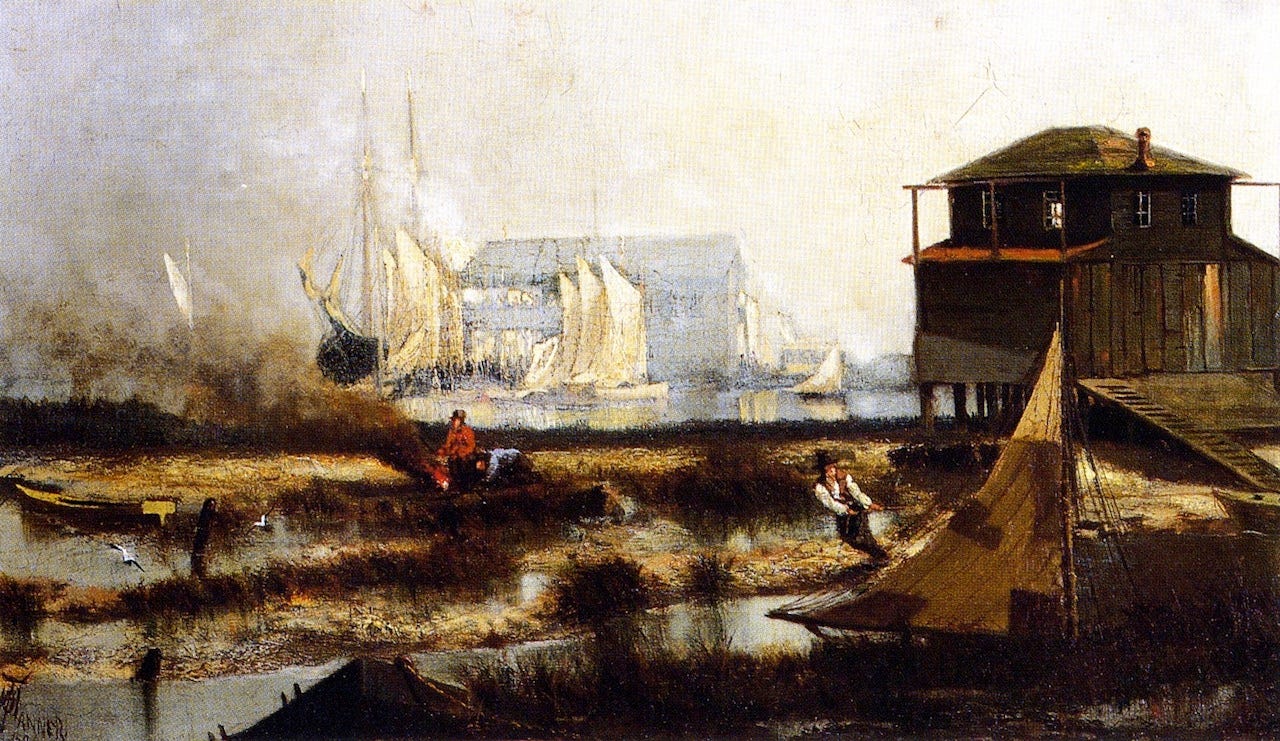
Henry’s pursuit of art came with mixed emotions. Being black made everything more challenging and burdensome for the sensitive young man. His first difficulty came in learning the craft as one studio after another rejected him when he sought their teaching. “I plodded along as best I could without instruction,” he wrote later.
Despite these setbacks, Henry did have his father’s ethos of hard work, discipline, and a positive attitude. Though still just in his early teens, he walked the streets of Philadelphia, observing art in store windows. He later recalled:
“After school, I would often go down on Chestnut Street, to see the pictures in Earle’s Galleries, or in the window of Bailey’s jewelry store. How well I remember ‘A Foggy Morning,’ by Cowell—in whose studio I afterward worked; or ‘A Morning at Long Beach,’ by Senat; how much better the numerous ‘Storm at Sea,’ by Hamilton, and still more numerous ‘Breezy Day off Dieppe,’ by Briscoe; how, after drinking my full of these art wonders, I would hurry home and paint what I had seen, and what fun it was!”
At home, Henry eagerly read books on art from his father’s library, supplementing his observed education with whatever knowledge he could gather.
It did help that Henry had his family’s support, even though they didn’t always believe art was a wise career choice. His father consistently helped financially and provided connections that eased some of the challenges Henry faced, giving him access to opportunities that most black or even many white Americans could not attain. This support eventually led him to the prestigious Pennsylvania Academy of the Fine Arts. Though there, dealing with racism continued as Henry was the only black student. He wrote:
“I was extremely timid, and to be made to feel that I was not wanted, although in a place where I had every right to be, even months afterward caused me sometimes weeks of pain. Every time any one of these disagreeable incidents came into my mind, my heart sank, and I was anew tortured by the thought of what I had endured, almost as much as by the incident itself.”
While many of these “disagreeable incidents” took the form of verbal abuse, there were also times when Henry was brutally beaten. The sorrow from these experiences weighed heavily, and he frequently fell ill during these formative years.
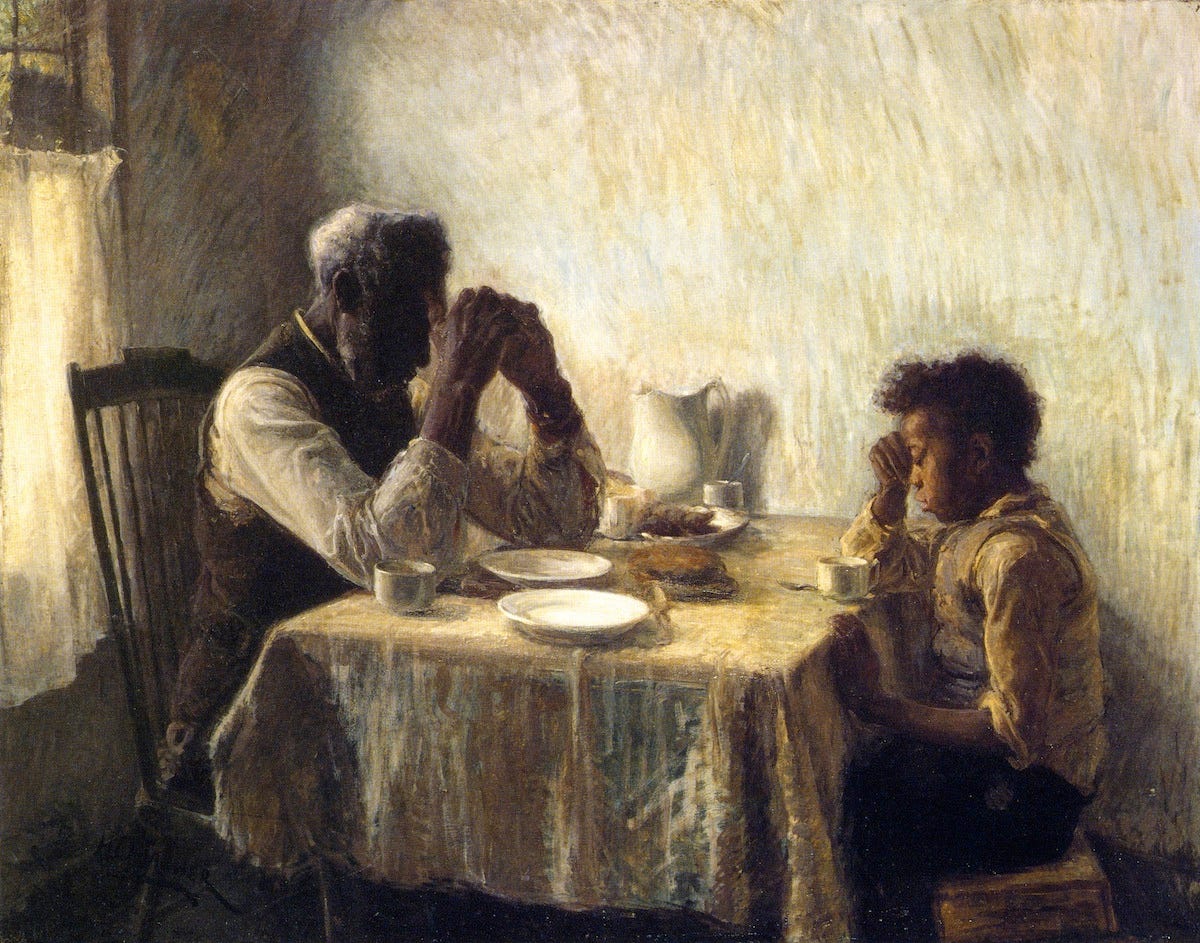
Despite these hardships, the Pennsylvania Academy of the Fine Arts became pivotal in Henry’s artistic development. His talent began to evolve into something extraordinary under the mentorship of Thomas Eakins, a teacher and arguably one of the most famous painters in Philadelphia. One lesson from Thomas stood out in particular and would stay with Henry for the rest of his life:
“About this time, Mr. Thomas Eakins, under whom I was studying at the Pennsylvania Academy of Fine Arts, gave me a criticism which aided me then, and ever since; it may apply to all walks of life, I will ‘pass it along.’ I had made a start on a study, which was not altogether bad, but very probably the best thing I had ever done. He encouraged but, instead of working to make it better, I became afraid I should destroy what I had done, and really did nothing the rest of the week. Well, he was disgusted. ‘What have you been doing? Get it, get it better, or get it worse. No middle ground of compromise.’”
Subscribe to get access
Read more of this content when you subscribe today.
Discover more from Historical Snapshots
Subscribe to get the latest posts sent to your email.
